Stories you can smell
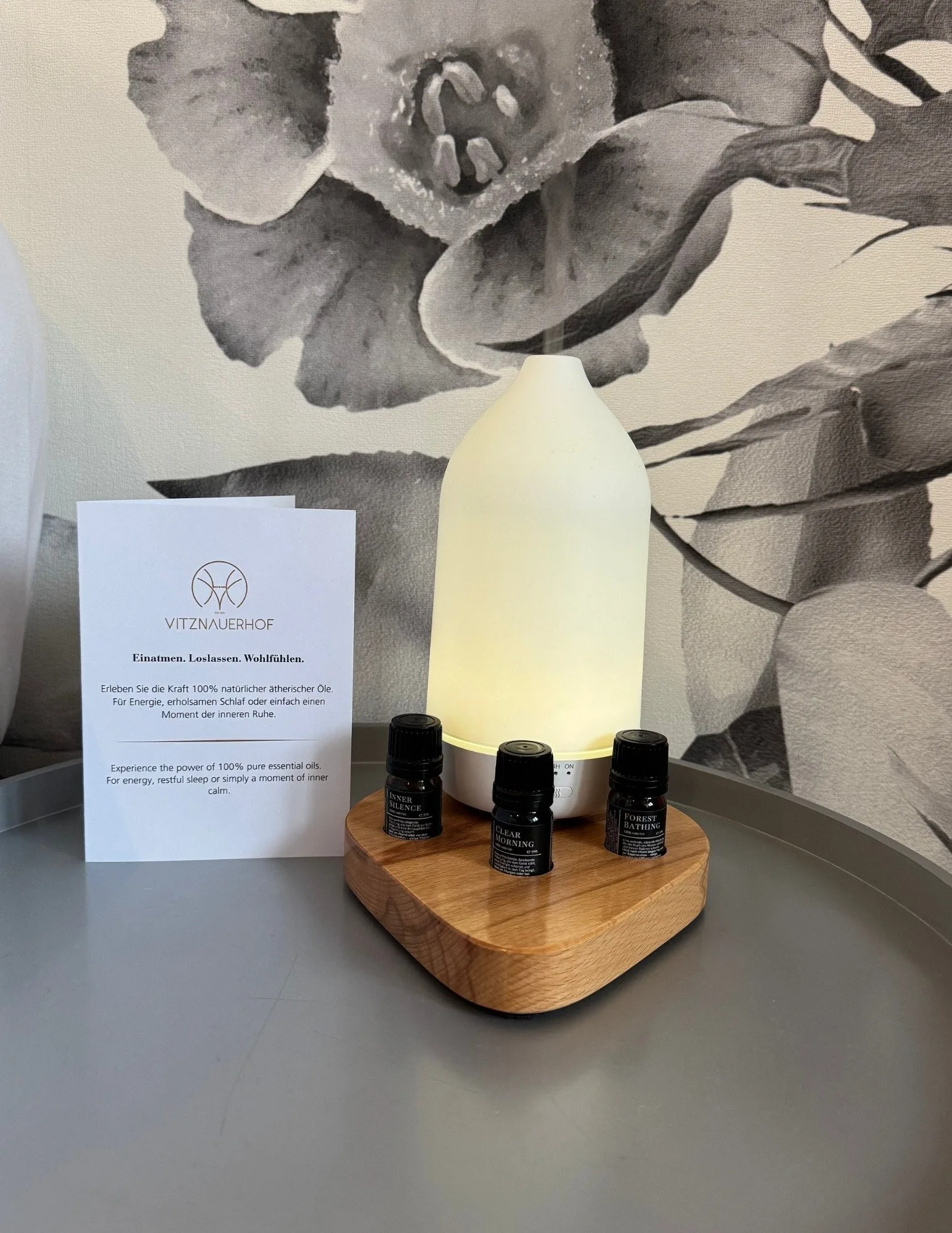
How a hotel tells its identity through scent, and why guests remember exactly that
Guests rarely remember a hotel's furnishings. They remember the feeling they associate with a place.
This is exactly where storytelling comes in. It translates the profile of a house into a narrative people believe. And scent is the means that makes this narrative most directly tangible.
A beautiful room is no longer enough
Good beds, good food and smooth service are standard today. In the premium segment, houses hardly differ in these respects any more.
What remains is the question: what does this house stand for? Guests want to understand that and be part of it. Houses with a clear answer stay in the memory.
Credible is what comes from the house
A good story is not invented. It grows out of the house itself: its origins, the architecture, the surrounding landscape, the people who work there. Or from collaboration with producers from the region.
Architecture, materials, light, service and scent tell this story together. If one part does not fit, the picture breaks.
Small gestures, big effect
Every personal touch writes a new line in the story of a house. A small surprise on a birthday. A scent recommendation that matches the guest's mood. An evening ritual in the room that lets the day fade gently.
Such moments cost little and last long. Because guests sense: here, I am seen.
Recurring rituals are part of this too: a special welcome gesture, a scent that waits in the room every evening. They turn a stay into a story that gets passed on.
Why scent in particular
Scent acts directly on feeling and memory. The sense of smell is immediately connected to the limbic system, without a detour via the intellect.
A guest can forget a picture. A scent they recognise years later, and with it the place.
An example: a hotel by the lake, built in an old boathouse of larch wood. The matching scent: cedarwood for the timber, lemon for the freshness by the water, a hint of lavender for the calm of the evening. Anyone who smells this scent at home later is back on the jetty in their mind.
How a scent that tells a house's story comes about
- Listening. We get to know the house: history, values, guests, rooms.
- Translating. From this story we choose oils that suit it.
- Testing. The team smells and decides with us. Only a scent the staff stand behind feels authentic.
- Applying. We define where and how intensely scent is used.
- Carrying it on. As a roll-on or blend, the guest takes the story home.
The team as storytellers
Staff are the most important storytellers of a house. Those who understand why the lobby smells of cedarwood can explain it to the guest.
A scent thus becomes a conversation. And the conversation becomes a memory.
From story to scent
Storytelling is not a marketing trick. It makes visible what a house stands for, in everything a guest sees, hears and smells.
Casa Cafaro accompanies hotels in translating this story into scents and rituals. Because guests who remember a house do not just come back. They become ambassadors.
Frequently asked questions
Does storytelling with scent also work outside the hotel industry? Yes. Every place has a story: a retirement home, a practice, an office, a shop. A fitting scent makes tangible what this place stands for, for customers, residents and staff.
Does every business need its own scent? No. Often one of our existing blends suits the story of the house. A signature scent is worthwhile where atmosphere shapes the experience.
How do guests learn the story behind the scent? For example via a small card in the room, the team at reception or the website. The story must be short so that it gets passed on.